
What gutter trouble looks like from the ground
You rarely need a ladder to know a gutter has a problem. Walk the house during a steady rain and again a day later, and look for these:
- A steady drip from a corner or joint, often with a dirty streak down the outside of the gutter below it.
- A visible dip or belly in the gutter line, or a gap you can see daylight through between the gutter and the fascia.
- Spike heads sticking out of the front of the gutter.
- Water pouring over the front edge at one point while the downspout runs at a trickle.
- Water dripping from behind the gutter, between the gutter and the house.
- Standing water you can see from an upstairs window 1 or 2 days after the rain stopped. Mosquitoes around the eaves in summer are another clue.
- A downspout that has come apart at an elbow or pulled off the wall.
- Splash marks, peeling paint or green algae on siding below the roofline.
What causes gutters to leak, sag and overflow
Leaks at seams, corners and end caps
Every corner, end cap and outlet on a gutter depends on sealant. Aluminum expands in summer sun and shrinks in the cold, and over the years that movement cracks the sealant. On sectional gutters the same thing happens at every joint along the run.
Sagging and pulling away
Older gutters were hung with long spikes driven through a tube (a ferrule) into the fascia or rafter ends. Spikes hold by friction and they work loose.
Hangers spaced too far apart let the gutter belly between them. If the fascia has rotted, nothing holds, no matter what fastener is used.
Overflow and standing water
A gutter needs a slight, steady slope to its outlet. When hangers shift, a low spot forms and water sits in it.
Debris collects there and the sag gets worse. Overflow can also mean a clogged downspout or simply a gutter that's too small.
Water behind the gutter
If shingles stop short or there's no drip edge, water wraps under the roof edge and runs down the fascia behind the gutter. This rots the board and looks like a gutter leak, but the gutter itself is fine.
How a gutter repair is done
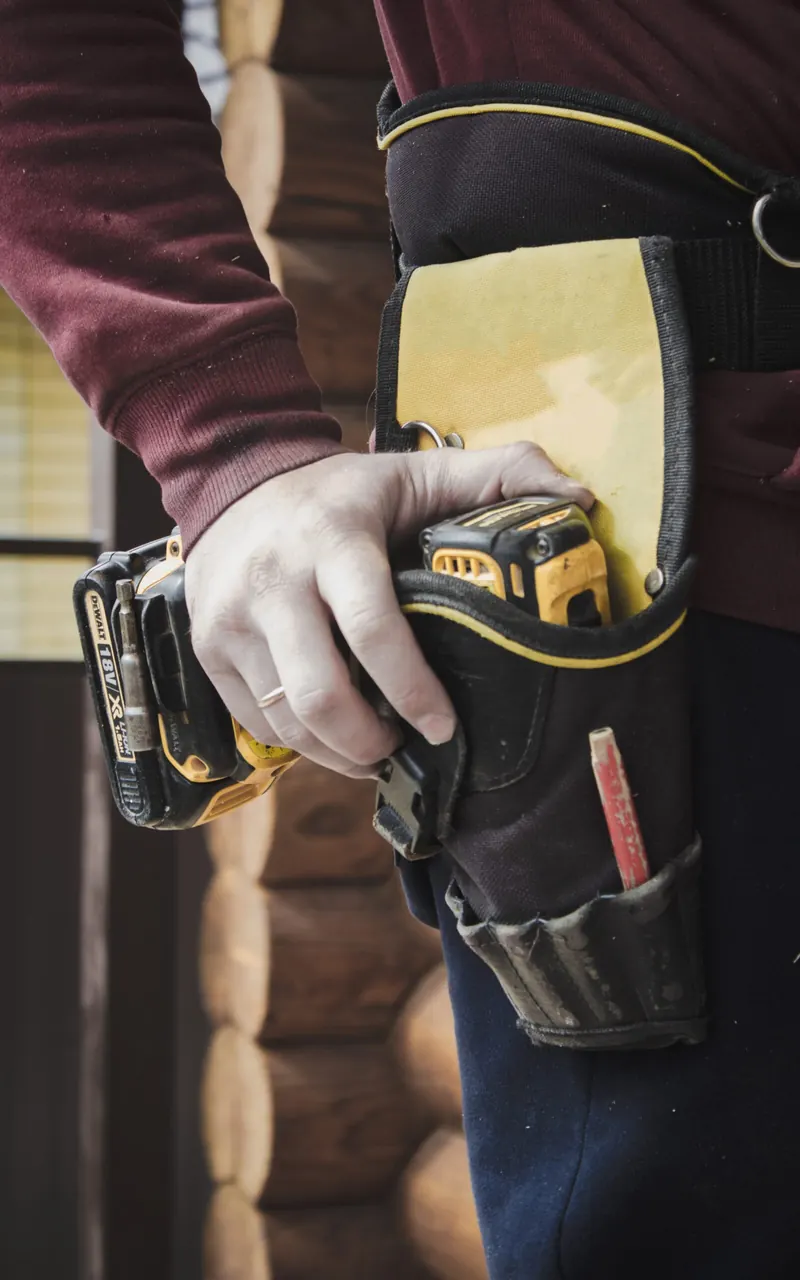
We start by finding the actual source, which often means running a hose into the gutter and watching where the water goes. Then the repair matches the cause:
- Resealing. Old sealant is scraped out, the joint is cleaned and dried, and new sealant is applied from the inside of the gutter.
- Replacing miters, end caps or outlets that are split or corroded.
- Rehanging. Loose spikes come out and hidden hangers go in, screwed to solid wood and spaced closely enough to carry snow and ice.
- Re-pitching. We snap a line, reset the hangers, and restore the fall toward the downspout.
- Section replacement. A crushed or creased length is cut out and a new piece formed to the same profile and color. An exact color match on faded gutters isn't always possible, and we tell you up front when it will show.
- Gutter apron. Where water runs behind the gutter, a metal apron is slid under the shingle edge and lapped into the gutter.
- Downspout repair. Elbows are refastened, crushed sections replaced, and straps reset. Larger problems are covered on our downspouts and drainage page.
We finish by running water through the repaired run and checking it from below.
How Pontiac's freeze and thaw cycles break gutters
Winter is hard on gutters here in a specific way. Average winter temperatures in Pontiac sit in the mid 20s, cold enough to freeze but close enough to the melting point that sunny afternoons melt roof snow regularly.
That meltwater runs into a gutter that's still below freezing and turns to ice. The next thaw adds another layer.
By February a gutter can be holding a solid bar of ice along its full length. That weight pulls spikes out of the wood, stretches the gutter away from the house, and pries seams open. So when it melts in March, the damage shows up as new drips and a gutter line that's no longer straight.
This is why most of our repair calls come in early spring, and why we rehang with screws and tighter hanger spacing. If your gutters hold a lot of ice every year, have them cleaned and the slope checked in late fall so they go into winter empty.
What affects the cost of gutter repair
Repair cost depends on how many spots need work and how hard they're to reach. The main factors:
- Number of failures. One corner is a small job. 8 leaking seams and 2 sagging runs is a different one.
- Height. Second-story and third-story work takes longer to set up safely.
- Whether sections must be replaced and whether the profile is a common one.
- Wood damage. If the fascia won't hold a screw, fascia repair has to be added.
- Cleaning. A gutter full of debris has to be cleaned before it can be sealed or re-pitched.
- Timing. After-hours and storm calls can cost more than a scheduled visit.
When the repair list gets long, we price it next to a seamless gutter replacement so you can compare. Sometimes replacing one side of the house is the sensible middle ground.
When a damaged gutter is an emergency
Call right away, at any hour, if:
- A section is hanging loose where it could fall on someone or on a vehicle
- A gutter has torn away and taken fascia or soffit with it, leaving an opening at the roof edge
- Overflow is running into a window well, a door threshold or the basement during a storm
Don't climb to pull down a hanging gutter yourself. A 30-foot run is awkward and heavier than it looks, and it can swing into a window or into you. See emergency gutter repair for what to do while you wait.
What to check after a repair
Look at the repaired area during the next good rain. A resealed corner should be dry underneath. A rehung run should sit tight to the fascia in a straight line.
Keep an eye on the same spots after the first winter. If a repaired gutter starts holding water again, the fascia may be moving, and we'd rather hear about it early.
Repairs are one part of what we do. For the full list, see our main page on gutter services in Pontiac, MI.
Gutter repair questions homeowners ask
Can a leaking gutter seam be resealed, or does the section need replacing?
Usually it can be resealed. The old sealant has to be scraped out completely, the metal cleaned and dried, and new gutter sealant worked into the joint from the inside.
Sealing over old, dirty caulk doesn't last. If the joint has pulled apart or the metal is corroded, the miter or section is replaced.
Why does my gutter overflow in the middle when it's clean?
Either the run has sagged so water pools at the low point, the downspout is blocked below the outlet, or the gutter is too small for the amount of roof draining into it. A roof valley that aims water at one spot can also overshoot the gutter in heavy rain, which is fixed with a splash guard or a larger gutter.
How long does a typical gutter repair take?
Resealing a few corners or rehanging one side of a house is commonly done in a single visit of a few hours. Repairs take longer when fascia has to be replaced, when a new section must be formed to match, or when sealant needs dry conditions that the weather isn't providing.
Is it worth repairing gutters that are 20 years old?
It can be. Age alone doesn't condemn aluminum gutters.
If the metal is straight and the problem is sealant or fasteners, a repair is good money. If the gutters are sectional, dented along their length, or failing at many points, repair costs add up and replacement becomes the better choice.
Will rehanging my gutters fix the gap between the gutter and the house?
Yes, if the wood behind is sound. We remove the old spikes, set hidden hangers with screws into solid fascia, and close the gap. If the fascia is soft, the screws won't hold and the board has to be replaced first.
Can I fix a gutter leak myself?
A small drip at a ground-level corner is a reasonable homeowner job with gutter sealant and a dry day. Leave it to us when the work is on a second story, when the gutter is loose or bent, or when you can't tell where the water is actually coming from.